

ALUME Journal • Small Apartment Guide
A one-bedroom apartment gives you three distinct rooms to work with. Most people treat them independently. The ones that look expensive treat them as one continuous palette — same tones, same textures, different moods.
Disclosure: This page contains affiliate links. Alume may earn a small commission at no extra cost to you. Recommendations are selected for the edit, not the commission.
Why One-Bedrooms Often Look Unfinished
The jump from studio to one-bedroom feels significant. You have walls now. You have a door between sleeping and living. You have an entryway, even if it's just three feet of floor between the front door and the living room.
But the decorating challenge shifts too. Now you're solving three rooms instead of one. And the mistake most people make is treating each room like a separate project — a living room that looks nothing like the bedroom, an entryway that looks like an afterthought, and a home that feels assembled rather than designed.
This guide fixes that. The eight methods below cover every room in the right order, with every piece chosen to work together across all three spaces.
Room One — The Living Room
Float Your Furniture Away From the Walls
THE MOST COMMON MISTAKE
The single most common mistake in a one-bedroom living room is pushing every piece of furniture against the wall. It feels like it should make the space bigger. It does the opposite — it creates a dead zone in the center of the room and makes the space feel like a waiting area, not a living room.
Float your sofa into the room. Pull it forward so there's even a few inches of wall behind it. Angle your chair toward the sofa, not toward the TV. Let the rug define the conversation zone, not the walls.
One Rug, Sized Up
THE FOUNDATION PIECE
In a one-bedroom living room, the rug is doing structural work. It defines the zone, grounds the furniture, and connects the room to the bedroom palette through texture and tone. The most common error: going too small. A rug that only fits under the coffee table is a bath mat. You need all front legs of the sofa on the rug at minimum — ideally all four legs of every piece in the conversation zone.
For most one-bedroom living rooms, that means an 8×10 at minimum. In warm honey-toned seagrass, that rug becomes the anchor the whole apartment builds from — the one piece that connects every room through tone and texture.
Layer Your Lighting — No Overhead
THE ATMOSPHERE METHOD
Overhead lighting is the enemy of a cozy living room. It flattens everything, casts unflattering shadows, and makes even beautiful furniture look institutional. In a one-bedroom living room, you want at least three light sources: an arc floor lamp over the sofa, a table lamp on a console or side table, and candlelight on the coffee table.
The arc floor lamp does the heaviest lifting. Positioned so the shade falls just above seated eye level, it creates a warm pool of light over the conversation zone that makes the entire room feel finished. Turn the overhead off. If you need more light, add a lamp — don't reach for the switch.
Room Two — The Bedroom
Build From the Bed Out
THE STARTING POINT
The bed is 80% of the bedroom. That means your duvet, your pillow arrangement, and your headboard are doing most of the decorating work before you add a single other piece. Start here. Get this right and the rest of the room almost decorates itself.
For a warm neutral one-bedroom, that means a linen duvet in cream or warm white, two euro shams in a coordinating texture, and two standard pillows in sage green or soft olive. The chunky knit throw at the foot of the bed completes it — draped loosely, never folded perfectly.
Give Each Side of the Bed a Light Source
THE SYMMETRY UPGRADE
Table lamps on both sides of the bed are one of those details that immediately signal a considered, designed room. It's also one of the most affordable upgrades you can make. Matching ceramic lamps in a warm ivory or matte white, with linen shades, create symmetry and warmth without looking too formal.
The light they cast — warm, directional, low — transforms the bedroom from a room you sleep in to a room you want to be in. If you can only add one thing to your bedroom this month, make it a second lamp.
One Mirror, Leaning
THE SPACE EXPANSION METHOD
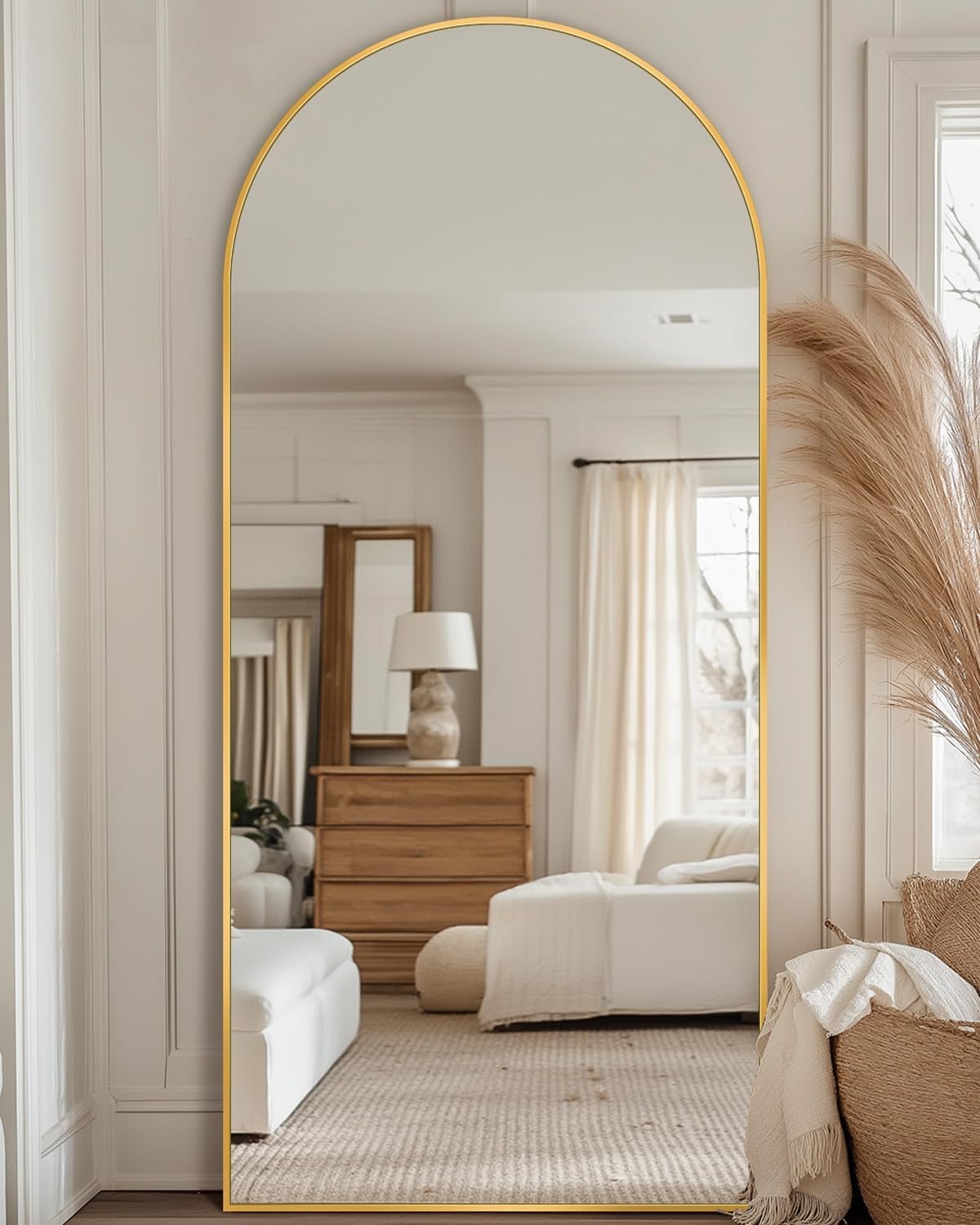
A full-length mirror leaning against the wall — not hung, leaning — does three things in a bedroom: it reflects light, it makes the room feel larger, and it gives the space an editorial quality that hung mirrors rarely achieve. An arched gold frame reads as intentional without being precious.
Position it in a corner or against the wall opposite the window for maximum light reflection. The slight forward angle of a leaned mirror reflects more of the room and the floor — which visually expands the space more than a flush-hung mirror ever will.
Room Three — The Entryway
Define the Entry With a Rug
THE TRANSITION SIGNAL
Most one-bedroom apartments don't have a formal entryway — they have a few feet of floor between the front door and the living room. The way to define that space without walls or furniture is a small layered rug. A flat-weave or low-pile runner in a warm natural tone signals transition: this is where the outside ends and the inside begins.
Don't skip this. An undefined entry makes the whole apartment feel like it starts abruptly. Even 2×3 feet of defined entry space changes how the entire apartment reads from the front door.
One Tall Object, One Basket
THE TWO-PIECE RULE
If your entryway has even a sliver of wall space, two objects will do all the work: something tall and something grounded. A faux olive tree in a woven seagrass basket gives the vertical element and the organic texture in one piece. It softens the transition from door to living room, adds life without maintenance, and connects the entryway palette to the living room without requiring a single additional purchase.
One tall plant or tree. One woven basket. That's a styled entryway. Everything else is optional.
The One-Bedroom Edit
Every piece below is chosen to work across all three rooms — same palette, same weight, same warmth.

Living Room — Sofa
Weture Modular Cloud Sectional — Cream
$379.99
Low-profile, modular, and cloud-soft. Float it away from the wall with the face toward the room — not toward the wall — and it becomes the room. The cream upholstery reads warm under lamp light and holds its shape after daily use. The most important piece in the one-bedroom living room.

Living Room — Rug
Safavieh Natural Fiber Seagrass Rug — 8×10
$248.89
The foundation piece. Warm honey-brown, coarse woven texture, and a weight that holds furniture in place. At 8×10 it anchors the full conversation zone with all front legs on the rug. The natural fiber tone connects the living room to the bedroom palette without a single additional purchase.

Living Room — Lighting
Brightech Sparq Arc Floor Lamp — Brass
$249.99
Slim gold arc arm, cylindrical cream drum shade, warm amber glow. Positioned behind the sofa corner, it defines the living zone with light rather than furniture. Turn the overhead off — this lamp is your primary light source and the room will be unrecognizable within a week.

Living Room — Accent Chair
Yaheetech Bouclé Barrel Chair — Ivory
$105.99
Angled 45° toward the sofa, this chair turns a living room into a conversation zone. The bouclé texture adds warmth and visual weight without making the room feel heavy. One of the highest-return pieces in a one-bedroom living room — the room doesn't feel complete without a second seat.

Living Room — Window
NICETOWN Linen Curtain Panels — White
$33.99
Hang ceiling to floor, even if your window doesn't reach the ceiling. The full length adds height to any room and the soft linen filters light warmly without blocking it. Fully opaque white linen reads as intentional — not improvised — and connects directly to the bedroom palette.

Bedroom — Lighting
PARTPHONER Ceramic Table Lamps — Set of 2
$69.99
Matching ceramic bases in warm ivory, linen shades, warm bulb glow. One on each nightstand is the fastest upgrade a one-bedroom bedroom can get. Symmetry signals design intention immediately — two lamps on two nightstands is the single most affordable thing you can do to make a bedroom look designed.
Bedroom — Mirror
NeuType Arched Floor Mirror — Gold Frame, 65"
$39.99
Lean it, don't hang it. The arched gold frame reflects light back into the bedroom and adds the editorial quality that makes a room look designed. Position it opposite the window or the table lamps for maximum light reflection. Works in the entryway too if the bedroom layout doesn't have a natural leaning wall.

Bedroom — Pillows
MIULEE Textured Linen Pillow Covers
$26.99
The fastest way to refresh a bedroom without buying new furniture. Layer in sage green or warm cream over your existing pillows — the texture does the styling work. Two in sage green against a cream duvet connects the bedroom palette to the living room without looking coordinated in a forced way.

Living Room — Styling
CEMABT White Ceramic Vase Set of 3
$19.99
Three varying heights, matte white finish, simple forms. On the coffee table with a pampas stem or dried branch, this set completes the surface styling without competing with anything else in the room. The matte white ceramic connects to the bedroom lamps and the entryway palette — the small object that ties all three rooms together.

Entryway — The Tall Object
MOSADE Faux Olive Tree — 6ft
$99.99
Six feet of realistic olive branches in a woven seagrass basket. In the entryway it signals arrival and softens the transition from outside to inside. In the living room corner it adds organic height and connects the palette to the natural fiber rug. Zero maintenance, zero watering. One piece that works in both rooms depending on where your layout needs it most — and the warm seagrass basket it comes in ties directly to the rug on the floor.
The Order to Do It
Start with the living room. It's the room you spend the most time in and the first thing guests see. Get the sofa placement, rug size, and lighting right before touching anything else. Once the living room palette is set, every other room follows it.
Bedroom second. The ceramic lamps, the leaned mirror, and the pillow covers take one afternoon and transform the room. The bed styling — draped throw, layered pillows — takes 20 minutes and completes it.
Entryway last. A rug and a tall plant — two pieces, 30 minutes — and the entryway is done. It's the smallest investment with the highest visual return because it sets the tone for every room that follows it.
Related: Studio Apartment Guide
Working with a studio instead of a one-bedroom? The zoning guide covers five methods for creating separate rooms without walls — rugs, lighting, curtains, furniture placement, and mirrors.
How to Zone a Studio Apartment Without Walls →Next in Journal
Some links in this page may be affiliate links — Alume may earn a small commission at no extra cost to you. Recommendations are selected for the edit, not the commission.