

ALUME Journal • Studio Decorating
Ten specific pieces — in the exact order I’d introduce them — that make a studio apartment look curated, not cobbled together.
Disclosure: This page contains affiliate links. Alume may earn a small commission at no extra cost to you. Recommendations are selected for the edit, not the commission.
Why Most Studio Apartments Look Cheap (And How to Fix It)
A studio doesn’t look cheap because of its size. It looks cheap because of its decisions — or the absence of them. Random furniture that doesn’t relate to each other. A rug that’s too small. Overhead lighting left on. A sofa pushed against the wall. These are styling choices, not space constraints, and they’re all fixable without a renovation or a large budget.
What makes a studio look intentional is coherence. Every piece should feel like it was chosen to work with the others — same general palette, compatible materials, consistent scale. When that’s in place, a 400 sq ft studio reads as a considered space. When it isn’t, even an expensive studio reads as temporary.
The ten pieces below are chosen to work together. They share a warm neutral palette — cream, ivory, natural fiber, warm wood, brass — and they’re sequenced in the order I’d introduce them, starting with the pieces that anchor the space and ending with the ones that finish it.
Define the Zone Before You Place Any Furniture
In a studio, a rug isn’t a decorative choice — it’s an architectural one. It’s the only tool available to separate your living area from your sleeping area without a wall. Get the rug down first, then arrange the furniture around it. If you do it the other way, you’ll end up with a rug that’s too small for the arrangement, which is the single most common mistake in studio decorating.
The right size for a studio living zone is an 8×10 minimum. Most people buy a 5×7 and wonder why the room looks like it doesn’t have a rug. Front legs of all seating pieces should sit on the rug — if they don’t, size up.
Natural fiber seagrass is the right material for a studio because it’s warm without being heavy, textural without being busy, and neutral enough to anchor any furniture arrangement you put on top of it.
Choose a Sofa That Defines the Space, Not Just Fills It
The sofa is the most important piece in a studio because it does two jobs at once: seating and zone definition. In a one-room apartment, the back of the sofa is the wall between your living area and everything else. That means scale and placement matter as much as the sofa itself.
Float the sofa — pull it away from the wall by at least 12 inches and face it into the room. This feels counterintuitive in a small space, but it creates depth behind the sofa that a wall-to-wall arrangement never achieves. The gap behind the sofa is also where a console table lives in a dual-purpose layout — adding a second functional surface without requiring more floor space.
A modular silhouette works best in studios because it configures to the space. A reversible chaise means you can flip the L-shape to suit the room rather than the other way around.
Turn Off the Overhead Light
This is the change that makes the biggest difference for the least money. Overhead lighting is the reason most studios look cheap in the evening — it flattens the space, removes all shadow and depth, and makes everything look like a showroom floor rather than a home.
Replace it with three lamps at three heights: a floor lamp behind the sofa (high), a ceramic table lamp on a side surface (mid), and a small accent lamp in a corner (low). Use 2700K warm white bulbs in all three. The room goes from flat and institutional to warm and multi-dimensional in twenty minutes.
An arc floor lamp positioned behind the sofa does the most work — it reaches over the seating zone and casts warm light downward, which is the most flattering and functional position for both reading and ambient light. It also takes up zero floor space within the seating zone itself.
Use a Mirror to Make the Studio Feel Twice as Large
A large floor mirror leaning against the wall opposite your main window doubles the perceived size of a studio by reflecting both the window and the room back into the space. It creates the illusion of depth where there’s a wall, and it bounces natural light into the parts of the room the window can’t reach.
In a studio, placement matters more than size. Opposite the window is always the right answer. The mirror should be tall enough to reflect the full height of the room — 60 inches minimum. A slim gold or brass frame ties into the warm neutral palette without drawing attention to itself.
Add One Statement Chair
A studio with only a sofa reads as incomplete. A sofa plus one well-chosen accent chair reads as designed. The chair is the piece that tells you someone made a decision about this room rather than just furnishing it.
In a studio, the accent chair doesn’t need to be large — it needs to be interesting. A bouclé texture, a curved silhouette, or an unexpected shape does more for the room than a second neutral piece. Place it angled toward the sofa at 30–45 degrees rather than parallel to the wall. That angle is what separates a conversation arrangement from a furniture lineup.
Keep the fabric in the same warm neutral family as the sofa — cream, ivory, oat, sand. The interest comes from texture and shape, not color contrast.
Hang Curtains at Ceiling Height
Most studios have one window and low ceilings. The curtain rod placement is the single fastest way to address both problems. Mount the rod as close to the ceiling as possible — not at the window frame — and let the panels fall all the way to the floor. The window appears dramatically taller, the ceiling appears higher, and the whole studio reads as more considered.
Sheer linen is the right fabric for a studio because it filters light rather than blocking it. In a small space, you want to keep every lumen of natural light you can get. Heavy blackout drapes make a studio feel like a cave regardless of how good everything else is.
Width matters as much as height: the panels should extend 4–6 inches beyond the window frame on each side. When the curtains are open, none of the fabric covers the glass — every inch of the window is exposed.
Add a Ceramic Table Lamp for Mid-Height Light
The three-lamp formula from change 3 requires a lamp at mid-height — somewhere between the floor lamp and a low accent. A ceramic table lamp on a console, side table, or shelf fills this role and adds material warmth at eye level. The ceramic base reflects light softly and adds texture to surfaces that would otherwise read as flat.
A set of two ceramic table lamps is worth it in a studio because you can place one in the living zone and one in the sleeping zone — creating visual continuity across the space with a single product. The matching bases tell the room they’re related, which is exactly the kind of cohesion that makes a studio look intentional rather than assembled.
Layer Texture on the Sofa
A bare sofa reads as unfurnished. A sofa with two linen pillow covers and a loosely draped chunky knit throw reads as lived-in and intentional. This is the cheapest and fastest change on this list — and one of the most visible.
The rule for pillows in a studio: two covers, same fabric, slightly different sizes if possible. Keep them in warm neutral tones — cream, oat, ivory — so they add texture rather than color contrast.
The throw gets draped, not folded. Fold it over the sofa arm or let it pool loosely at one end. A perfectly folded throw reads as a showroom. A loosely draped one reads as someone actually lives there.
Fill the Empty Corner
Every studio has at least one empty corner that reads as unfinished. A large woven basket in that corner costs under $30, requires no installation, and solves the problem in sixty seconds. Fill it with the throw blanket when it’s not on the sofa, or leave it empty — the basket itself is the object.
A set of ceramic vases on the coffee table or console completes the surface styling. Three vases at different heights — one tall, one medium, one low — is the arrangement. Add a single dried stem to the tall one. The styling reads as considered without requiring fresh flowers or ongoing maintenance.
Add Vertical Interest With a Tall Plant
A studio needs vertical interest — something that draws the eye upward and breaks up the horizontal lines of the furniture. A tall plant beside a window is the most effective way to achieve this, but real plants require maintenance that most studio dwellers don’t have time for.
A quality faux olive tree at 6 feet tall is the best alternative. The soft grey-green of olive leaves is the one color that reads as neutral rather than a color statement — it sits naturally in a warm neutral room without competing with the palette. Placed beside the window, it catches the natural light and looks significantly more realistic than it does in product photos.
The seagrass basket it comes in ties it directly into the natural fiber palette of the rug. The whole corner — tree, basket, window light — becomes the best-styled spot in the studio for essentially no ongoing effort.
The 10-Piece Studio Edit
Every piece below is chosen to work together — same warm neutral palette, compatible materials, consistent scale. Introduce them in order if you’re starting from scratch.

Change 1 — Zone Anchor
Safavieh Natural Fiber Seagrass Rug
$89.00–$189.00
Get the rug down before anything else. The seagrass basketweave is warm, textural, and neutral enough to anchor any furniture arrangement without competing with it. In a studio, 8×10 is the right size — it defines a living zone large enough to feel intentional. Front legs of all seating on the rug, minimum.

Change 2 — Zone Definer
Weture 108” Modular Cloud Sectional Sofa
$389.99
The right sofa for a studio is modular — it configures to the space rather than the other way around. The deep boneless seat and L-shape with chaise works in any studio layout. Float it 12 inches from the wall, chaise facing in. The back of the sofa becomes the visual divider between your living zone and the rest of the room. Warm beige fabric sits cleanly in the neutral palette.

Change 3 — Lighting Layer One
Brightech Montage Arc Floor Lamp
$110.99
Position this behind the sofa, arc reaching over the seating zone. It replaces the overhead light with warm directional illumination that makes the living area feel like an intentional space rather than a corner of a room. Turn the overhead off. Turn this on. The difference is immediate.

Change 4 — Space Multiplier
NeuType Arched Full Length Floor Mirror — Gold
$109.99
Lean this on the wall directly opposite your main window. At 64 inches tall, it reflects the full height of the room back into itself — doubling the perceived depth of the studio and bouncing light into the parts the window can’t reach. No drilling. No installation. The slim gold frame ties into the warm neutral palette without drawing attention to itself.

Change 5 — The Statement
Yaheetech Bouclé Accent Barrel Chair — Ivory
$89.99
The piece that makes the living zone feel designed rather than furnished. The curved bouclé silhouette adds visual interest without adding color contrast. Angle it 30–45 degrees toward the sofa rather than parallel to the wall. That one positioning decision changes the entire room from a furniture lineup to a conversation arrangement.

Change 6 — Height Maker
NICETOWN Sheer Linen Curtains
$37.99
Mount the rod as close to the ceiling as possible — not at the window frame. Let the panels fall to the floor. The window looks twice as tall. The ceiling reads as higher. Sheer linen filters light rather than blocking it, which is right for a studio where every lumen of natural light counts. Extend the rod 5 inches past the window frame on each side so the fabric never covers the glass when open.

Change 7 — Lighting Layer Two
PARTPHONER Ceramic Table Lamp — Set of 2
$49.99
One in the living zone on a console or side table, one in the sleeping zone on a nightstand. The matching bases create visual continuity across the studio — both zones feel like they belong to the same room. The ceramic material catches light softly and adds material warmth at eye level. Use 2700K warm white bulbs in both.

Change 8 — Texture Layer
MIULEE Textured Linen Pillow Covers
$15.99
Two covers on the sofa. Same fabric, slightly staggered sizes if possible. Cream linen adds texture rather than color contrast, which is right for a neutral palette. At under $16, this is the highest-ratio change on this list: visible from across the room, costs almost nothing.

Change 9 — Surface Styling
CEMABT White Ceramic Vase Set of 3
$29.99
Three vases at three heights on the coffee table or console. Tall, medium, low. Add a single dried eucalyptus stem to the tallest one. This arrangement takes sixty seconds to set up and reads as intentional styling rather than random objects. The matte white ceramic is warm enough to sit in the neutral palette without disappearing into it.
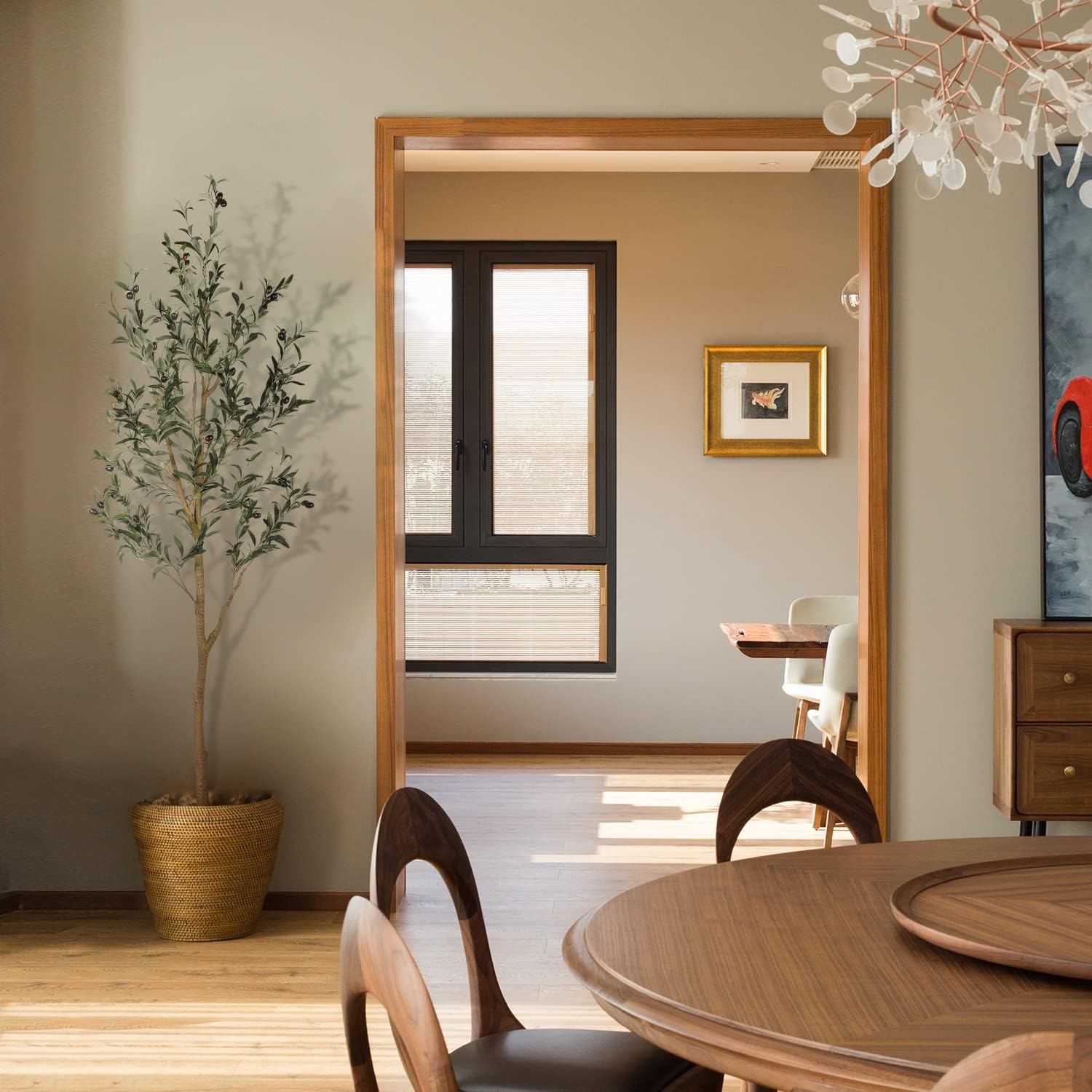
Change 10 — Vertical Interest
MOSADE 6ft Faux Olive Tree with Seagrass Basket
$79.99
Place it beside the window where it catches natural light and looks the most realistic. At 6 feet, it draws the eye upward and breaks up the horizontal lines of the furniture. The seagrass basket echoes the rug and ties the whole natural fiber palette together. Zero maintenance. No watering. No dying leaves in week three.
The Studio Rule Nobody Tells You
A studio doesn’t need more stuff. It needs fewer, better-placed things. The instinct when a studio looks bare is to add objects. The right instinct is to check the placement of what’s already there — is the rug the right size, is the sofa floated, is the overhead light off, is there a lamp at each height.
Get those four things right first. Then add the pieces above in order. By the time you reach the faux olive tree, the studio will already look like a designed space — the tree is just the finishing touch on something that’s already working.
From the Journal
Renting your studio and want all of these changes to be fully reversible? The complete deposit-safe rental decorating guide — every piece removable, zero holes required.
How to Decorate a Rental Apartment Without Losing Your Deposit →From the Journal
Want the full warm neutral living room on a strict budget? Eight pieces, under $500, everything linked.
Small Apartment Living Room Ideas Under $500 →Next in Journal
Some links in this page may be affiliate links — Alume may earn a small commission at no extra cost to you. Recommendations are selected for the edit, not the commission.