

ALUME Journal • Small Apartment Guide
Your entryway is three feet of floor and one wall. It's also the first thing anyone sees when they walk in — and the last thing they see when they leave. Here's how to make it count.
Disclosure: This page contains affiliate links. Alume may earn a small commission at no extra cost to you. Recommendations are selected for the edit, not the commission.
Why Small Entryways Always Look Unfinished
Most apartment entryways fail for the same reason: they're treated as a passthrough rather than a room. Shoes end up wherever they land. Keys go wherever there's a flat surface. Coats pile on a chair that was never meant for coats. The result is a space that reads as chaotic before you've even seen the rest of the apartment.
The fix isn't more storage — it's intentional storage. A console table with a specific surface. Wall hooks at a specific height. A bench that earns its place. When every piece has a purpose and a position, even three feet of entry floor looks designed.
The seven mistakes below are the most common reasons a small entryway looks cluttered, cheap, or unfinished — and the specific fixes for each one.
No Rug at the Door
THE MOST COMMON MISTAKE
A bare floor at the entry makes the apartment feel like it starts abruptly. There's no transition — you're just suddenly inside. A small natural fiber rug, even 2×3 feet, creates that transition. It signals arrival. It defines the entry zone. It gives the whole apartment a cleaner read from the front door because the eye has somewhere to land before it moves deeper into the space.
It doesn't need to match the living room rug. It needs to share the same tonal family — warm neutral, natural fiber, coarse texture — so the two spaces connect without looking coordinated in a forced way.
Nowhere to Put Anything Down
THE FUNCTION MISTAKE
If there's no designated surface at the entry, everything ends up on the floor or on whatever furniture is nearest to the door. Keys, mail, sunglasses, bags — they all need a home within reach of where you come in. A narrow console table solves this without taking significant floor space. Even 9 inches deep gives you a landing zone for daily essentials without blocking traffic through the entry.
The surface itself matters too. Style it with one object — a small vase, a candle, a tray — so it reads as intentional rather than a catch-all. When there's one decorative object on the surface, everything else that lands there looks like it belongs. When there's nothing on the surface, the clutter owns it.
Coats on a Chair
THE STORAGE MISTAKE
A coat draped over a chair near the door is the single clearest signal that an entryway wasn't designed. It's not a storage failure — it's a design failure. Wall hooks exist for exactly this. A small rack with a shelf above it gives you coat storage, bag storage, and a surface for keys or sunglasses in about 24 inches of wall space.
Mount it at the right height — hooks at 60–66 inches from the floor for coats, lower hooks at 48 inches if you want a second row for bags. The shelf above creates a surface without requiring floor space. One piece, three functions, zero chairs sacrificed to coat duty.
Shoes Everywhere
THE CLUTTER MISTAKE
Shoes scattered near the door is the fastest way to make a small entryway look smaller. Not because of the shoes themselves — because of the visual noise. A small storage bench with a cushioned seat solves both problems at once: the shoes have a place to go under or inside the bench, and the bench gives you somewhere to sit while putting them on. It also adds a horizontal surface that anchors the entry zone visually.
In a very tight entryway where a bench won't fit, a small woven basket tucked against the wall does the same job with less footprint. Two or three pairs maximum — anything more goes in the closet.
Nothing Tall
THE HEIGHT MISTAKE
A small entryway with only low furniture reads as incomplete. The eye needs something to travel upward — something that draws attention to the vertical space and makes the ceiling feel higher than it is. A faux olive tree in a woven seagrass basket is the single best tall object for a small entryway. It's organic, warm, connects directly to the living room palette, and adds six feet of visual height in a footprint smaller than a doormat.
If floor space is too tight for a tree, a tall mirror leaning against the wall achieves the same vertical effect while reflecting light back into the space. One tall object. That's all it takes.
No Mirror
THE LIGHT MISTAKE
A mirror in the entryway does three things none of the other pieces can: it reflects light back into the space, it makes the entry feel twice as large, and it gives the entryway a functional reason to exist beyond storage. Every well-designed entryway has a mirror. Not because it's decorative — because it's practical. You check it on the way out. Guests check it on the way in. The light it bounces back into the space makes even the darkest entry feel less cave-like.
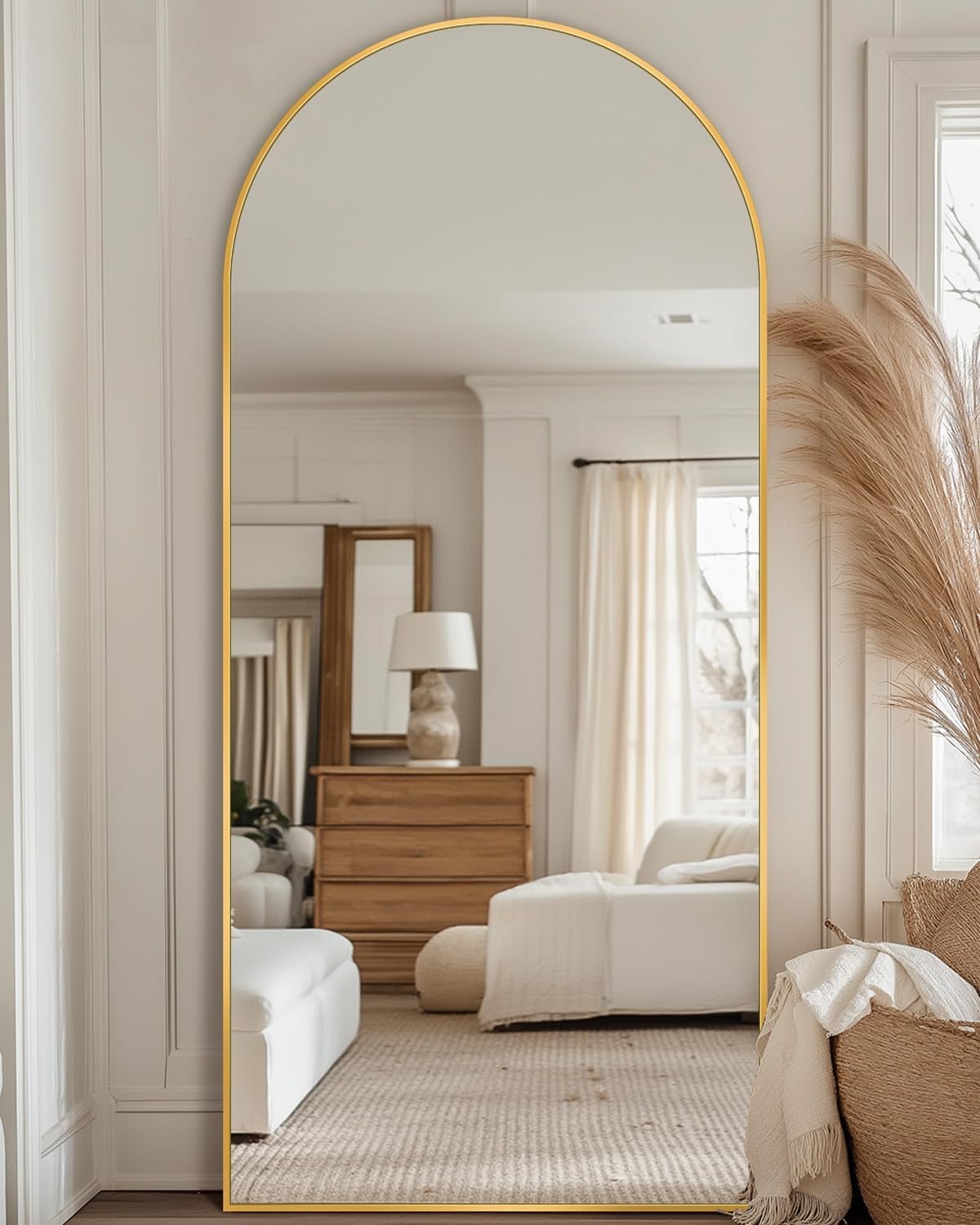
An arched gold-frame mirror leaning against the entry wall is the most versatile option. It works in the smallest spaces, requires no installation, and reads as intentional styling rather than an afterthought.
Too Many Objects, Wrong Scale
THE STYLING MISTAKE
Small entryways get over-styled more often than under-styled. The instinct to fill every surface leads to a space that looks busier than the rooms beyond it — which is exactly backwards. The entryway should feel calm. A single vase on the console. One candle. The hooks doing storage duty. The bench doing seating duty. That's it.
The rule for small entryway surfaces: one decorative object per surface, maximum. The console gets a vase or a candle — not both. The bench gets a throw — not a throw plus a pillow plus a basket. Restraint in a small space reads as confidence. Abundance reads as anxiety.
The Small Entryway Edit
Every piece below fixes one of the seven mistakes above — and works with the warm neutral palette throughout the apartment.

Mistake 1 — No Rug at the Door
Hausattire Hand Woven Jute Braided Rug — 2×3, Natural
$26.49
100% natural jute, hand braided, warm neutral tone. At 2×3 feet it fits any entry without blocking door swing. The coarse woven texture connects directly to a living room seagrass rug — same family, same warmth, different scale. The single most affordable fix in this list.

Mistake 2 — Nowhere to Put Anything Down
VASAGLE LIRY Console Table — Honey Brown
$139.99
Narrow profile, three drawers for keys and daily essentials, open bottom shelf for baskets or shoes. The honey brown finish reads warm under any light and connects directly to natural fiber textures throughout the apartment. At 9.4 inches deep it clears most entry hallways without blocking traffic.

Mistake 3 — Coats on a Chair
Homode Wall Coat Rack with Shelf — White, 24"
$34.99
White particleboard shelf with five black metal dual hooks. Mounts to the wall in 20 minutes and gives you coat storage, bag storage, and a display surface above in 24 inches of wall space. The white and black combination sits quietly against any wall color without competing with the warm neutral palette around it.

Mistake 4 — Shoes Everywhere
VASAGLE Shoe Storage Bench with Cushion — White/Gray
$69.99
Cushioned seat, two open compartments and one hidden storage section. The white and gray finish keeps the entry feeling light and clean. Sits low enough that it doesn't block sight lines through the entry, and the cushion adds a soft horizontal element that makes the whole space feel more considered.

Mistake 5 — Nothing Tall
MOSADE Faux Olive Tree — 6ft
$99.99
Six feet of realistic olive branches in a woven seagrass basket. The single best tall object for a small entryway — organic, warm, connects to the living room palette, and adds vertical height in a footprint smaller than a doormat. Zero maintenance. Moves between the entryway and the living room corner depending on what the layout needs.
Mistake 6 — No Mirror
NeuType Arched Floor Mirror — Gold Frame, 65"
$39.99
Lean it against the entry wall — no installation required. The arched gold frame reflects light back into what is often the darkest corner of the apartment, makes the entry feel twice as large, and gives the space a functional reason to exist beyond storage. The same mirror works in the bedroom if the entry layout doesn't have a natural leaning wall.

Mistake 7 — Too Many Objects, Wrong Scale
CEMABT White Ceramic Vase Set of 3
$19.99
Three heights, matte white finish, clean forms. On the entryway console, use just the tallest one with a single dried stem. That's the one object the surface gets. The other two move to the living room coffee table. The restraint is the point — one ceramic object on the console reads as styled. Three reads as cluttered.

Connect to the Living Room
Safavieh Natural Fiber Seagrass Rug — 8×10
$248.89
The living room anchor that connects to the entryway jute mat. Same natural fiber family, same warm honey tone, different scale. When the doormat and the living room rug share the same material language, the apartment reads as one designed space rather than a series of unrelated rooms. The 8×10 is the right size for most one-bedroom and studio living rooms.

Add Warm Light
PARTPHONER Ceramic Table Lamps — Set of 2
$69.99
Most apartment entryways rely on overhead lighting — the harshest possible option for the first impression. A ceramic table lamp on the console table, casting warm amber light at eye level, transforms the entry from a functional corridor into a room you actually want to walk into. The second lamp in the set goes on a nightstand in the bedroom.

Carry the Palette Through
MIULEE Textured Linen Pillow Covers
$26.99
Sage green and warm cream linen pillow covers that connect the bedroom and living room to the entryway palette. One on the storage bench cushion — in sage green — ties the entry to the living room without buying new furniture. The texture reads as warm and considered, and the color carries through every room in the apartment without looking coordinated in a heavy-handed way.
The Order to Do It
Start with the rug. Lay it down before moving any furniture. Everything else orients around where the entry zone begins. Next, mount the wall hooks — that one fix eliminates the coat chair immediately. Then bring in the console table and style the surface with a single object. The bench goes against the opposite wall or below the hooks if the layout allows it.
Add the tall object last — the olive tree or the mirror — whichever the layout needs most. If the entry is narrow, the mirror goes here and the tree goes in the living room. If the entry has a corner, the tree fills it and the mirror goes in the bedroom. One tall object between them. The apartment uses both.
The whole transformation takes one afternoon and costs less than a single piece of living room furniture.
Related: One-Bedroom Guide
Once the entryway is set, the one-bedroom guide covers every other room in the same warm neutral palette — living room, bedroom, and how to connect all three.
One-Bedroom Apartment Decorating Ideas: The Complete Room-by-Room Guide →Next in Journal
Some links in this page may be affiliate links — Alume may earn a small commission at no extra cost to you. Recommendations are selected for the edit, not the commission.