

ALUME Journal • Small Apartment Guide
Magazine-worthy isn't about budget. It's about the specific decisions that separate a room that looks designed from one that looks decorated. Here's what those decisions are.
Disclosure: This page contains affiliate links. Alume may earn a small commission at no extra cost to you. Recommendations are selected for the edit, not the commission.
Why Some Small Apartments Look Designed and Others Don't
The difference between a small apartment that looks magazine-worthy and one that looks like a first apartment is rarely money. It's almost always a set of specific decisions that most people don't know to make — and a set of common mistakes that most people make without realizing it.
Furniture against the walls. Overhead lighting on. Rug too small. No vertical elements. Surfaces cluttered with equal-sized objects. Matching everything in the same finish. These six patterns appear in almost every apartment that looks unfinished, regardless of how much was spent on the furniture inside it.
The seven secrets below are the decisions that reverse all of that — each one specific, each one achievable at any budget, and each one with an outsized effect on how the room reads.
Float the Furniture
THE LAYOUT SECRET
Every magazine room has furniture floating away from the walls. Every unfinished apartment has furniture pushed against them. This is the single most reliable signal of whether a room was designed or just furnished. Floating the sofa 12 inches from the wall creates a conversation zone, gives the room depth, and signals that someone made intentional decisions about how the space should feel rather than just where things could fit.
It feels counterintuitive — floating furniture away from walls seems like it would make a small room feel smaller. It does the opposite. The open space behind the sofa makes the room feel larger and more considered simultaneously.
One Oversized Mirror
THE SPACE SECRET
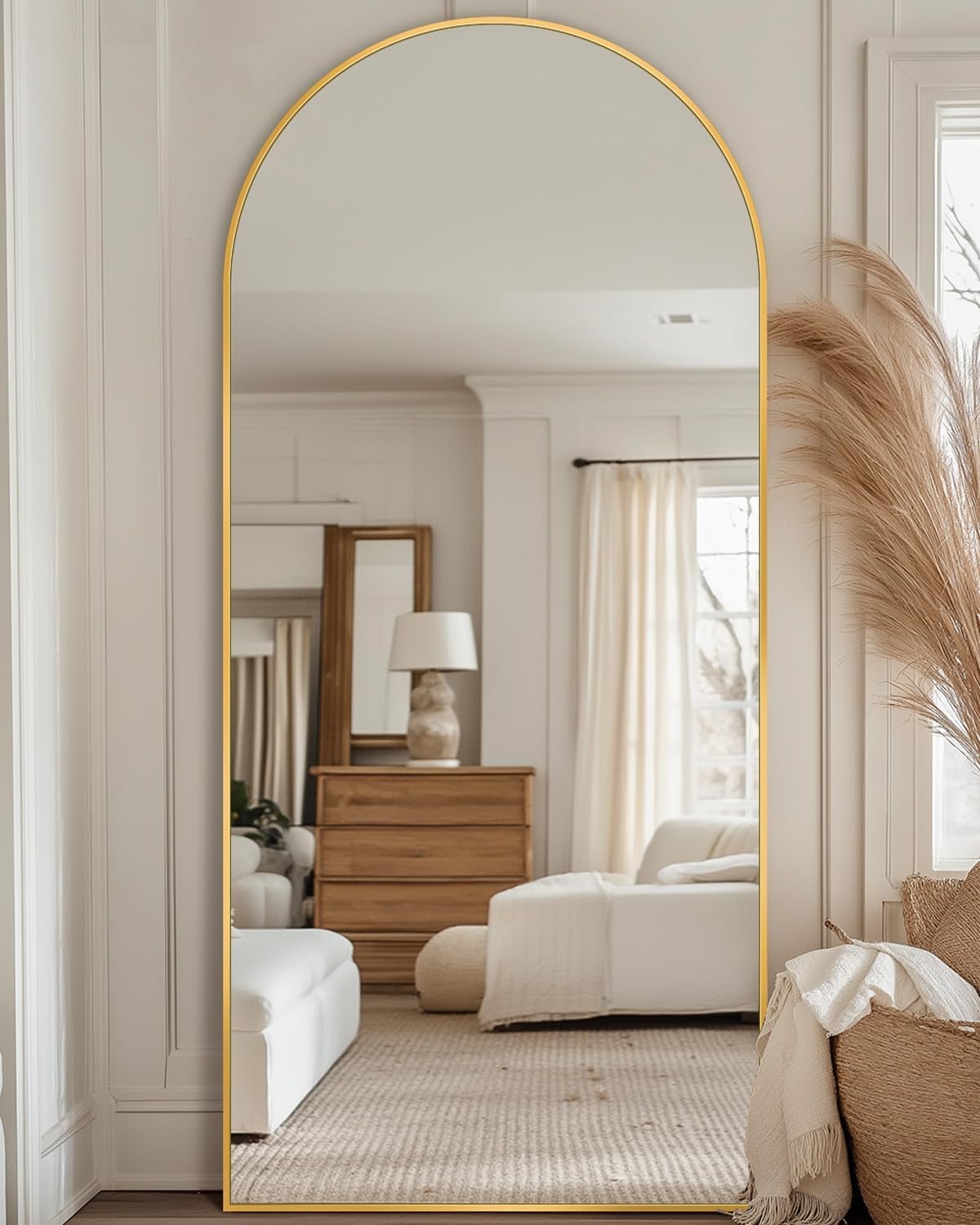
Every magazine apartment has a large mirror and most real apartments don't. A full-length arched mirror leaning against the wall — not hung, leaning — does three things no other object can: it reflects light, it doubles the perceived depth of the room, and it adds an editorial quality that signals the room was designed by someone with taste rather than furnished by someone with a budget.
The specific choice matters: arched frame, gold finish, floor-length, leaning. A small hung mirror reads as functional. A large leaning mirror reads as intentional. The same $109 can look like a $500 design decision or a $40 bathroom purchase depending entirely on the choice.
Layer the Lighting
THE ATMOSPHERE SECRET
Magazine apartments never use overhead lighting. They use layered light at multiple heights — a floor lamp at standing height, table lamps at seated height, candles at surface height. This creates depth, warmth, and shadow in a way that overhead lighting physically cannot. Overhead lighting flattens a room. Layered lighting sculpts it.
The arc floor lamp is the most important piece in this system — it's tall enough to fill vertical space, directional enough to define a zone, and warm enough to make everything in its radius look better. Turn the overhead off. Add the arc lamp. Look at the room. The difference is immediate and significant.
Add a Second Seat
THE COMPOSITION SECRET
A sofa alone is a watching zone. A sofa with an accent chair is a conversation zone. Magazine rooms always have at least two distinct seating pieces because two pieces create a relationship — and that relationship is what makes a room feel designed rather than furnished. The chair doesn't need to match the sofa. It needs to face it at an angle.
An ivory bouclé barrel chair angled 45 degrees toward the sofa is the specific composition that makes this work in a small apartment. The bouclé texture adds warmth, the barrel shape reads as editorial, and the angled position creates a conversation zone that signals the room was planned rather than assembled.
One Tall Organic Element
THE VERTICAL SECRET
Magazine rooms always have something tall and organic — a plant, a tree, a large branch in a vase. This vertical element draws the eye upward, makes ceilings feel higher, and adds the sense of life that distinguishes a room from a furniture showroom. Without a tall organic element, even a beautifully furnished room feels static.
A faux olive tree in a woven seagrass basket is the specific choice that works in a warm neutral small apartment — the tree is tall enough to fill vertical space, the basket grounds it in the room's natural fiber palette, and the olive branches add organic movement that no geometric object can replicate.
Style in Odd Numbers at Three Heights
THE STYLING SECRET
Magazine surface styling always follows the same invisible rule: odd numbers of objects at three different heights. A tall ceramic vase, a medium stack of books, a small candle. Three objects, three heights, one arrangement that reads as intentional rather than collected. Even numbers of objects at the same height read as symmetrical and staged. Odd numbers at varied heights read as editorial and considered.
This rule applies to every surface in the room — the coffee table, the console, the nightstand. One tall object, one medium object, one small object. The specific pieces matter less than the heights and the number.
Commit to One Palette Completely
THE COLOUR SECRET
Magazine rooms have one palette carried through every layer of the room — walls, furniture, textiles, and surface objects all share the same tonal family. The most common mistake in a small apartment is having a neutral sofa, a patterned rug, accent pillows in three different colors, and surface objects in finishes that don't relate to anything else. Each piece might be attractive individually. Together they create visual noise that reads as undesigned.
Warm neutrals — cream, ivory, honey, sage, natural linen — form the specific palette that photographs best, reads as expensive at any budget, and creates a sense of completeness that no other palette achieves as reliably. Commit to it entirely. Every new object should earn its place in the palette before it enters the room.
The Magazine-Worthy Edit
Every piece below is a specific component of the magazine-worthy small apartment — chosen for what it contributes to the composition, not just what it looks like in isolation.

Secret 1 — Float It
Weture Modular Cloud Sectional — Cream
$339.99
The sofa that earns its float. Low-profile, cloud-soft, cream upholstery that reads as expensive under warm light. Float it 12 inches from the wall, face it into the room, and it becomes the composition anchor that everything else builds from.
Secret 2 — The Mirror
NeuType Arched Floor Mirror — Gold Frame, 65"
$39.99
Lean it — don't hang it. The arched gold frame leaning against the wall is one of the most reliable magazine-worthy signals in a small apartment. It reflects light, doubles the room's perceived depth, and reads as a design decision rather than a purchase.

Secret 3 — Layer the Light
Brightech Sparq Arc Floor Lamp — Brass
$249.99
The piece that makes every other piece look better. Warm amber glow at standing height, slim gold arc arm, cylindrical cream drum shade. Magazine apartments never use overhead lighting — this lamp is why they don't have to. Turn the overhead off the day this arrives and never turn it on again.

Secret 4 — The Second Seat
Yaheetech Bouclé Barrel Chair — Ivory
$105.99
Angled 45 degrees toward the sofa. That angle is the composition decision that makes the room look designed. The bouclé texture adds warmth, the barrel shape reads as editorial, and the relationship between the chair and the sofa creates the conversation zone that magazine rooms always have.

Secret 5 — The Tall Element
MOSADE Faux Olive Tree — 6ft
$99.99
Six feet of organic movement in a woven seagrass basket. The tall element that draws the eye upward, makes ceilings feel higher, and distinguishes a designed room from a furniture showroom. No magazine room is without one. No maintenance required.

Secret 6 — Three Heights
CEMABT White Ceramic Vase Set of 3
$19.99
Three heights, one material, one arrangement that follows the odd-number rule automatically. Tall vase with a pampas stem, medium vase empty, small vase beside a stack of books. That's the magazine coffee table arrangement — and it works because the heights vary and the number is odd.

Secret 7 — Commit to the Palette
Safavieh Natural Fiber Seagrass Rug — 8×10
$248.89
The palette anchor. Honey-brown natural fiber connects every warm neutral piece in the room through tone and texture. Large enough that all front legs of the conversation zone sit on it — the rug that makes the room look composed rather than assembled.

Secret 7 — Palette Commitment
MIULEE Textured Linen Pillow Covers — Sage
$26.99
The one accent color in the warm neutral palette — muted sage green that completes the composition without competing with it. Two covers on the sofa is the right proportion. The texture adds warmth, the color signals intention, and the restraint signals taste.

Secret 3 — Bedroom Light Layer
PARTPHONER Ceramic Table Lamps — Set of 2
$54.98
Matching ceramic lamps on both nightstands — the bedroom version of the layered lighting secret. Symmetry signals intention. Warm amber glow at nightstand height signals the overhead is off permanently. Two lamps that transform a bedroom from functional to editorial.

Secret 6 — Bedroom Surface
NICETOWN Linen Curtain Panels — White
$33.99
Hung ceiling to floor — not at the window frame, at the ceiling. The length adds height to any room and the soft linen filters warm light without blocking it. Magazine rooms always have floor-length curtains. Curtains that stop at the window frame are one of the most reliable signals that a room wasn't professionally designed.
The Magazine-Worthy Order
Start with the layout. Pull the sofa away from the wall — that one decision changes how the whole room reads. Add the arc lamp and turn the overhead off. Lean the mirror opposite the lamp. Angle the chair toward the sofa. Place the olive tree in the corner. Style the coffee table with three objects at three heights.
The whole transformation takes one afternoon. Not because magazine-worthy is easy — but because it's specific. Once you know the seven decisions, making them takes less time than the decorating you've been doing that wasn't working.
The room won't look like you spent more money. It will look like you made better decisions. That's the actual secret.
Related: Color Guide
The palette commitment is the hardest of the seven secrets. The color guide breaks down exactly which warm neutrals work together — and the common mixing mistakes that make neutral rooms look muddy instead of magazine-worthy.
Small Apartment Color Palette: Why Warm Neutrals Win Every Time →Next in Journal
Some links in this page may be affiliate links — Alume may earn a small commission at no extra cost to you. Recommendations are selected for the edit, not the commission.